Walk down any bedding aisle and you'll see the same promise on every package: better sleep. But two pillows that look identical can feel completely different once you lie down — and the reason is almost always the fill. Understanding what's inside helps you choose a pillow that matches how you sleep, rather than guessing.
Why the fill matters
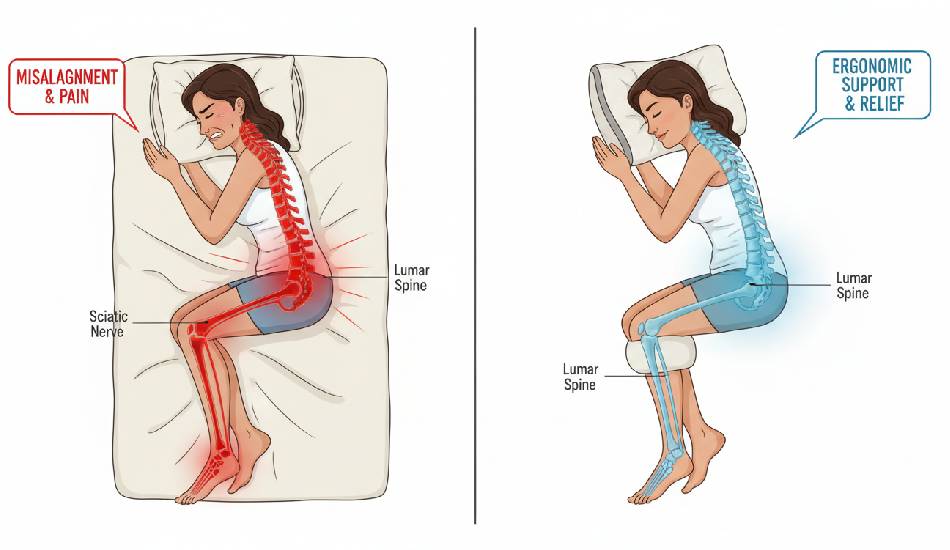
A pillow has one main job: to keep your head and neck in line with your spine while you sleep. The illustration above shows the difference. When a pillow collapses or is the wrong height, the neck bends out of line. When it supports you properly, your spine stays in a relaxed, neutral position. The fill determines how much support you get, how well it holds its shape through the night, and how warm it sleeps.
The main fills at a glance
| Fill | Feel | Support | Sleeps | Best for |
|---|---|---|---|---|
| Solid memory foam | Slow, contouring sink | Firm, consistent | Warmer | Side and back sleepers who want steady support |
| Shredded memory foam | Soft but moldable | Adjustable | Cooler than solid foam | Anyone who wants to fine-tune height |
| Latex | Springy and buoyant | Firm, responsive | Cool | Hot sleepers and combination sleepers |
| Down / feather | Plush and squashable | Soft, needs fluffing | Varies | Stomach sleepers and those who like a soft pillow |
| Polyester fiber | Soft and light | Low to medium | Varies | Budget buys and guest rooms |
Memory foam: the contour specialist
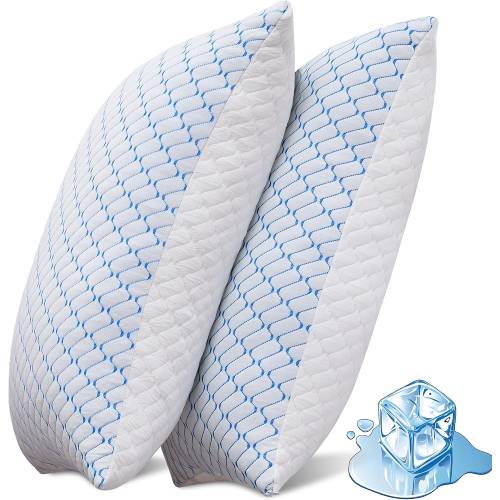
Memory foam responds to body heat and pressure, slowly molding around the shape of your head and neck. That makes it excellent at holding a consistent height all night, which is why it's popular with side sleepers. Solid foam can feel warm, so many modern designs use ventilated cores, cooling covers or shredded foam to improve airflow.
Latex: supportive with a bounce
Latex offers support similar to memory foam, but it pushes back rather than letting you sink. It tends to stay cooler and springs back into shape instantly when you change positions — a plus if you move around during the night.
Down and feather: classic softness
Down and feather pillows feel luxurious and are easy to scrunch into shape. The trade-off is support: they compress more under weight and need regular fluffing. They often suit stomach sleepers, who generally need a thinner, softer pillow to keep the neck from tilting upward.
- Side sleepers: a higher, firmer pillow to fill the space between the shoulder and head.
- Back sleepers: a medium-height pillow that supports the curve of the neck.
- Stomach sleepers: a thin, soft pillow — or none at all.
Don't forget what goes around it
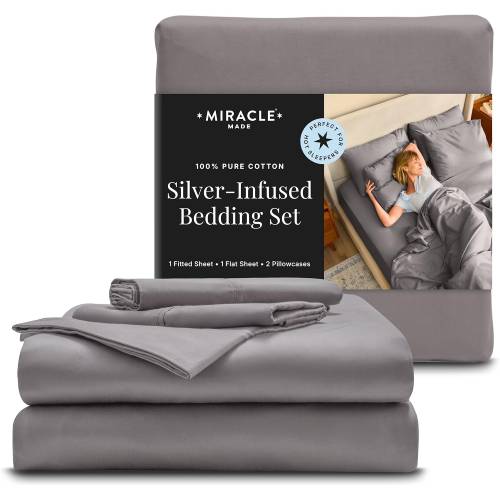
A breathable pillowcase and good-quality sheets make any pillow more comfortable, especially if you tend to sleep warm. Cotton is a popular choice because it's soft and lets air move freely.
The bottom line
There's no single best pillow — only the best pillow for you. If you want steady support, start with memory foam. If you sleep hot, consider latex. If you love a soft, sink-in feel and sleep on your stomach, down may be your match. And if neck or shoulder pain persists, it's worth talking to a doctor or physical therapist.